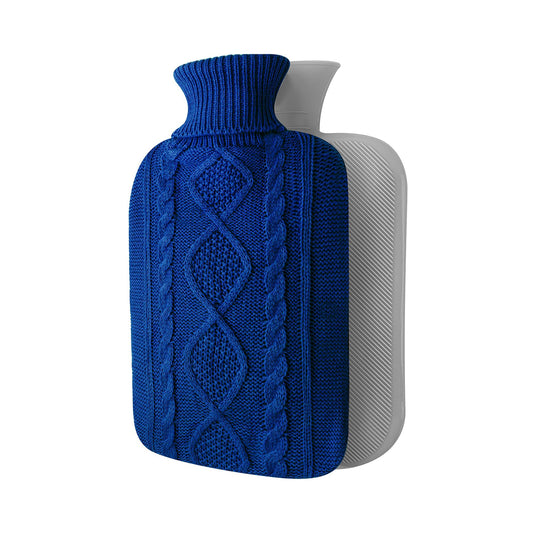
Check each OliviaLiving product listing for its applicable BS1970:2012 standard statement. A standard statement is only one part of safe use: always follow the instructions supplied with your bottle and inspect it before every use.
Hot water bottle safety checklist
Never use boiling water.
Fill the bottle to no more than two-thirds capacity.
Carefully expel excess air before tightening the stopper.
Check the body, seams and stopper for cracks, splits, wear or leaks before every use.
Always use a suitable cover or towel and avoid prolonged direct skin contact.
Never sit, lie or place heavy pressure on a filled hot water bottle.
Do not fall asleep while using heat treatment. Use the bottle to pre-warm the bed, then remove it before sleeping.
How to fill a hot water bottle safely
Inspect the bottle. Do not use it if the rubber or PVC, seams, neck or stopper show damage, cracking, brittleness or leakage.
Let freshly boiled water cool. Never pour boiling water directly into the bottle. Follow the temperature guidance supplied with your product.
Hold the bottle upright. Fill slowly to a maximum of two-thirds capacity.
Remove excess air carefully. Lower the bottle onto a flat surface and gently expel air until water is visible at the neck.
Tighten and test. Screw the stopper in straight and firmly by hand. Wipe the bottle dry, hold it away from your body and check for leaks before use.
Add a cover. Use a fitted cover or wrap the bottle in a towel before placing it near the body.
Do not fall asleep while using a hot water bottle as heat treatment, and never lie on top of one. To warm a bed, place the covered bottle under the bedding before bedtime and remove it before going to sleep. Never use a hot water bottle and an electric blanket together.
Can children use a hot water bottle?
Children must never fill a hot water bottle. If an adult chooses to use one for a child, use cooled water around bath temperature, fit a protective cover, supervise continuously and never allow the child to sit or lie on it. Do not place a hot water bottle in a baby's sleep space or directly against a child's skin.
Who should take extra care?
People with reduced skin sensation, poor circulation or conditions such as diabetes may not notice heat injury quickly. Ask a healthcare professional whether heat treatment is suitable and never apply a hot water bottle directly to numb or insensitive skin.
How often should I replace it?
Check the bottle before every use and stop using it immediately if there is cracking, fading, stiffness, thinning, damaged seams or leakage. UK burns specialists recommend replacing a hot water bottle about every two years from first use, even though the British Standard itself does not set an expiry date. The flower or daisy marking on the neck shows the manufacture date; keep your purchase date as well.
Storage and care
Empty the bottle completely after use.
Allow it to dry with the stopper removed.
Store it unfilled in a cool, dry place away from sunlight, radiators, sharp objects and chemicals.
Do not microwave a standard hot water bottle.
What should I do after a burn or scald?
Remove the heat source and cool the affected area under cool running water for 20 minutes. Do not use ice, butter or creams. Remove nearby clothing and jewellery unless stuck to the skin, cover the area loosely with clean cling film, and seek medical help. Call emergency services for severe, extensive or deep burns, burns to the face, hands, feet or genitals, or if the person is very young, unwell or you are concerned.
Choose the right hot water bottle
Every OliviaLiving hot water bottle is made to BS1970:2012.
This guide provides general safety information and is not a substitute for the instructions supplied with your product or professional medical advice.
Compare two everyday bottles
Start with a 2L classic or a 2L classic knit cover. Product pages show the current capacity, cover and handling details; always follow the supplied instructions.